
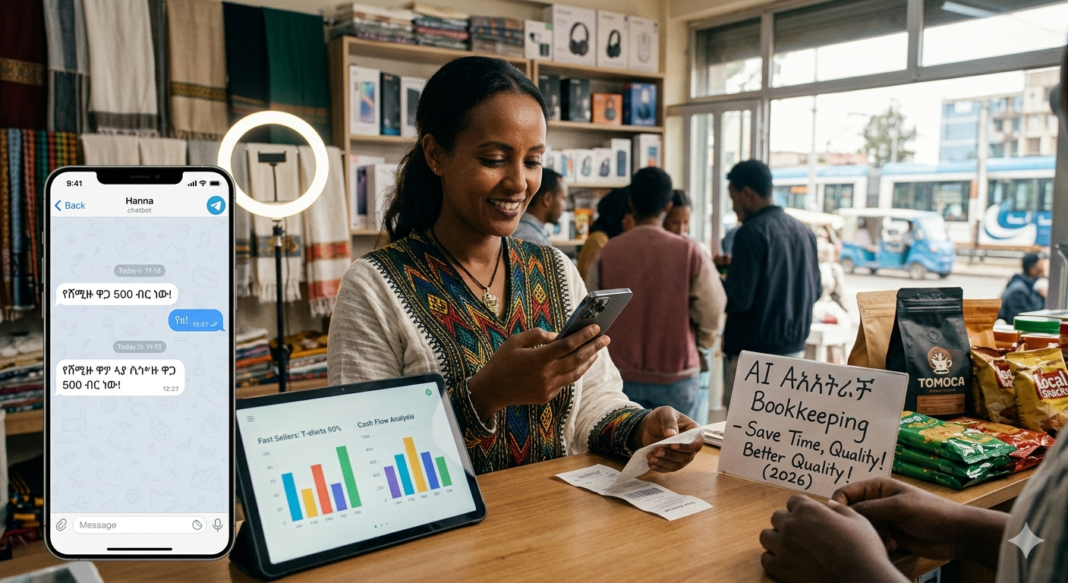


It is an important moment to be an entrepreneur in Ethiopia. As the country pushes deeper into the Digital Ethiopia 2030 agenda, artificial intelligence is no longer limited to tech hubs and startup circles in Addis Ababa. In 2026, AI is increasingly reaching ordinary business owners through the devices they already use every day: smartphones, messaging apps, payment tools, and simple business platforms.
For a small business, AI does not need to mean complex coding, large software contracts, or an expensive technical team. Whether you run a retail boutique, a coffee export operation, a pharmacy, a catering business, or a delivery service, the real value of AI is practical. It can take over repetitive work, speed up response times, and reduce small daily bottlenecks so you can spend more time on growth, relationships, and decision making.
The key in 2026 is not to chase hype. It is to use simple tools that genuinely save time without damaging quality or the personal trust that many Ethiopian businesses depend on. Here are some of the most effective ways AI can help.
1. Automating Customer Service on Telegram and WhatsApp
For many businesses in Ethiopia, Telegram and WhatsApp are already the front desk. Customers ask the same questions repeatedly: price, delivery area, location, stock availability, opening hours, or whether a specific item is still available. Answering those messages one by one can drain time that should be going toward sales or operations.
AI-powered chat assistants can now handle much of that repetitive first contact. A simple bot connected to Telegram or WhatsApp Business can greet customers, answer frequently asked questions, collect order details, and direct more complex cases to a human. The major improvement in 2026 is that AI tools are getting better at handling local language patterns and more informal messaging styles, including Amharic and Afaan Oromoo use cases.
That matters because response speed affects trust. Customers are more likely to stay engaged when they receive immediate answers, and business owners are freed to focus on negotiation, fulfillment, and higher-value customer relationships.
2. Making Social Media Marketing Less Exhausting
Small businesses are expected to stay visible every day on Facebook, TikTok, Telegram, and other channels. But content creation is one of the easiest tasks to delay because it takes time, consistency, and creative energy. For business owners already managing inventory, cash flow, and customer issues, daily posting can become a burden.
This is one of the most practical places to use AI. Mobile-friendly AI tools can clean up product photos, remove messy backgrounds, generate simpler promotional layouts, and help write captions quickly. A shop owner can take a quick photo of a new arrival and use AI to produce a cleaner, more professional post without hiring a designer or photographer for every update.
AI writing tools can also help generate caption drafts, product descriptions, and campaign ideas. The business owner should still review the final message, especially to keep tone and local relevance natural, but the drafting work becomes much faster. That keeps marketing consistent without turning it into a full-time struggle.
3. Smarter Bookkeeping and Inventory Control
Many small businesses still rely on notebooks, loose receipts, or basic spreadsheets to track expenses and stock. That often leads to small arithmetic mistakes, poor visibility into cash flow, and wasted time at the end of the week or month. AI-supported bookkeeping and inventory tools are helping solve that problem.
With a smartphone camera, business owners can scan invoices, utility bills, supplier receipts, and handwritten records. AI can extract the numbers, categorize the expenses, and build a cleaner picture of where money is going. Inventory tools can also flag fast-moving items and help owners reorder before stock runs out.
That has a direct business effect. Better inventory awareness prevents lost sales, and better expense tracking helps owners make decisions based on reality instead of guesswork. For small businesses operating on thin margins, that kind of clarity matters.
4. Solving Sector-Specific Problems Faster
Some of the strongest AI use cases are specific to sector pain points rather than general productivity.
- Agribusiness: Farmers, suppliers, and agricultural traders can use AI-based mobile tools to identify crop disease, pest damage, or nutrient issues from photos. Instead of waiting days for advice, they can get faster guidance and make earlier decisions.
- Delivery and Logistics: Businesses using bikes, vans, or shared delivery staff can rely on smarter route planning tools to reduce fuel waste and improve delivery sequencing in busy urban areas.
- Retail: Shops can use AI-supported product sorting, simple demand analysis, and automated promotions to react more quickly to what customers are actually buying.
The pattern is the same across sectors: AI adds the most value when it removes friction from a repeated task that already costs time or money.
5. Using AI Without Ignoring Local Reality
Even though AI is becoming more accessible, adoption still has to fit Ethiopian business realities. Internet quality, electricity reliability, device limits, and affordability all matter. That is why business owners should prioritize tools that are lightweight, mobile-first, and usable even in inconsistent connectivity conditions.
Where possible, offline-friendly or low-bandwidth tools are a smarter choice than systems that assume constant high-speed internet access. The businesses that benefit most from AI are usually not the ones buying the most advanced platform. They are the ones choosing a tool that fits how they already work.
6. Protecting the Human Touch
One risk is using automation in a way that weakens trust. In Ethiopia, business relationships are often built on responsiveness, familiarity, and human credibility. That means AI should support the business, not replace the part customers rely on most.
Use AI for data entry, repetitive replies, scheduling, drafting, and first-line support. But keep people involved in final sales decisions, negotiation, conflict resolution, and sensitive customer communication. The most successful businesses in 2026 will not be the ones that automate everything. They will be the ones that use AI to protect time while keeping relationships strong.
For Ethiopian small businesses, AI is becoming less about experimentation and more about practical efficiency. The opportunity is real, but it works best when owners stay disciplined: choose simple tools, solve real problems, and keep quality and trust at the center of the business.